Posted in News, Publications, UWTSD Hub News on Oct 15, 2025.
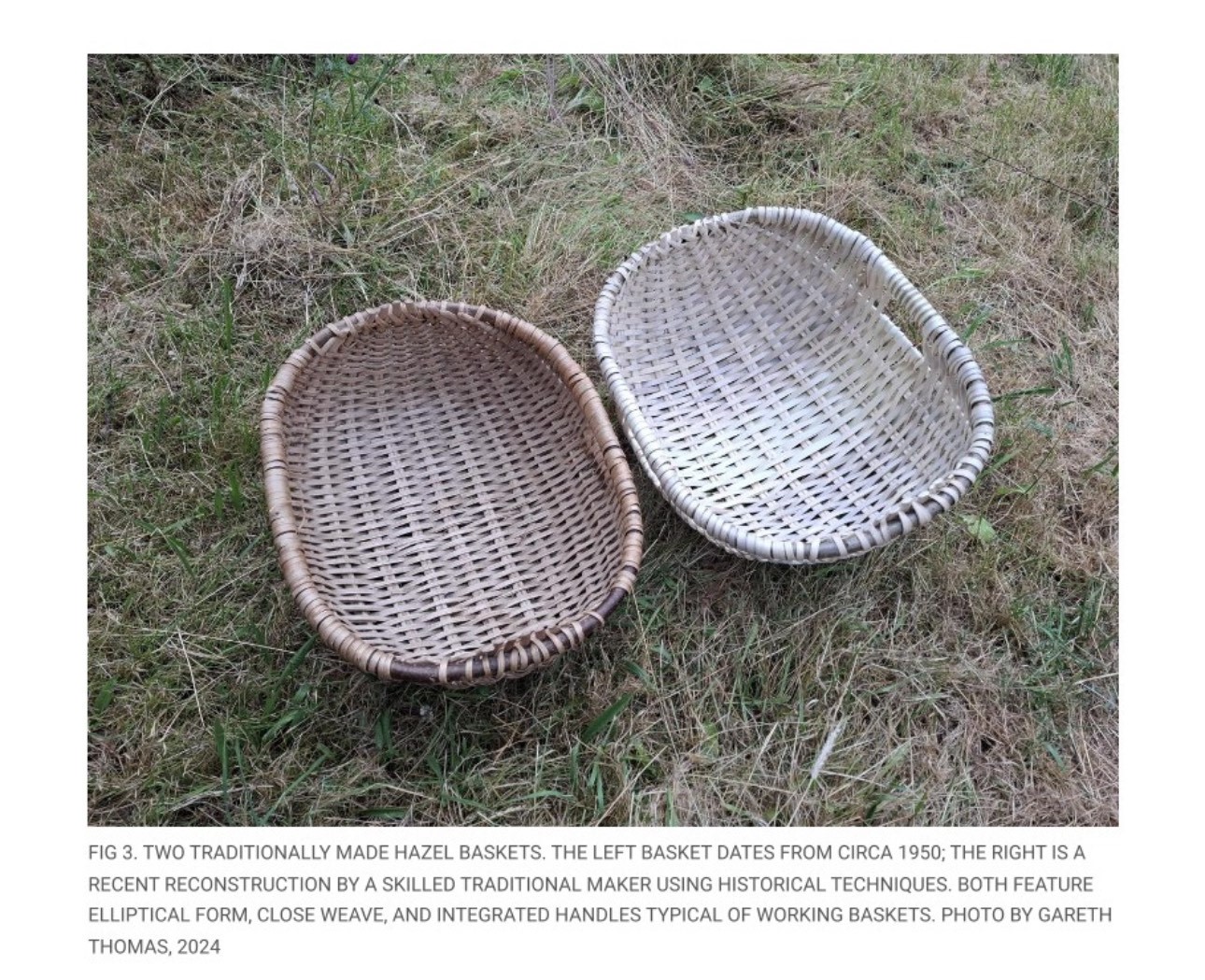
This study, by Gareth Thomas, explored the reconstruction of traditional Welsh cleft hazel basketry through a transdisciplinary methodology that combines descriptive and thematic analysis with ethnographic methods. It aimed to document the reconstruction process in detail and compare the outcomes of a volunteer-led initiative with the practices of traditional makers. The descriptive element of the project recorded the sequence of actions and technical decisions made by volunteers, revealing the challenges and adaptations involved. In contrast, its comparative aspect examined how material selection, preparation, and construction techniques differed between experimental reconstruction and the place-based, embodied expertise of traditional craftspeople. Traditional makers drew on generational knowledge, aligning material selection with seasonal rhythms and integrating biophilic design principles that enhanced structural resilience and cultural resonance. Volunteers, lacking this ecological literacy and tacit skill, often struggled with sourcing and technique, leading to compromises in durability and visual coherence. While the reconstruction process offered valuable insights, it could not fully replicate the depth of practice sustained by traditional makers. Rather than serving as a controlled experimental model, the study embraced an experiential and ethnographic lens to explore lost traditions, emphasising the value of heritage crafts as living, situated practices.
This Open Access paper can be found here, published in the EXarc Journal, Issue 2025/2.
The publication can also be accessed here as a PDF: Ethnography_on_the_missing_majority_of_material_culture__Gareth Thomas.pdf