Posted in BRIDGES IPO news, News, UWTSD Hub News on Jun 11, 2026.

UNESCO-MOST BRIDGES is delighted to announce our involvement in the landmark Teifi Fyw — Pobl a Natur gyda'i gilydd / Living Teifi — People and Nature Together partnership, an ambitious initiative bringing together scientific, cultural, community and humanities-based approaches to support the long-term flourishing of the Afon Teifi — one of Wales’s most ecologically and culturally significant river systems.
The project has secured an initial £1.4 million grant from The National Lottery Heritage Fund to support a two-year development phase. This phase lays down the foundation for a wider five year programme of work, with an anticipated £10m investment over the full delivery period, subject to successful funding capture.
Rather than treating environmental recovery and cultural renewal as separate agendas, Teifi Fyw approaches the river as a living system shaped through ecological processes, histories of use, governance, memory and more-than-human relations.
BRIDGES’ signature methodology is being used to shape the development phase of the project. This approach brings together transdisciplinary modes of enquiry and practice, designed to connect scientific, artistic and community-based ways of knowing. It emphasises relational, place-based engagement and iterative collaboration across sectors, supporting forms of knowledge-making that are grounded in lived experience as well as ecological and social evidence.
Through this methodology, the development phase is being co-designed as an integrated process of learning and experimentation, bringing together conservation practitioners, researchers, artists, interested parties and local communities. The aim is to develop new forms of dialogue between different approaches to strengthen locally grounded pathways for environmental care, cultural vitality and long-term resilience.
As the longest river flowing entirely within Welsh borders, the Afon Teifi begins its journey of 73 miles from its source at Teifi Pools high in the wild Mynyddoedd Cambria (Cambrian Mountains) cascading down to its reunion with the sea at Bae Ceredigion (Cardigan Bay). Along its course, the water froths and bubbles from a lofty glacial landscape, down through golden wetlands alive with nature, into deep, forest-lined ravines, and woodland streams, before finally flowing into a vibrant, heritage-rich tidal estuary.
Throughout this descent, the river carves out the natural dividing line between Ceredigion and Carmarthenshire, meandering alongside a tapestry of farmland, wild meadows, and the communities of countryside villages and small riverside towns.
The river has a vibrant history “of sewin and saints, of poets and participation, of community and connection”, of coracles and crab fishing, of legends and livestock, and of folklore and fauna.
Deeply embedded in the BRIDGES transdisciplinary way of working, the project recognises the river as a living thread of Welsh identity and resilience. For many, the Teifi flows deep with hiraeth; an ancient Welsh word with no direct English translation that evokes an inherently rooted sense of home, belonging, and cultural and ancestral connection, often woven with a sense of longing, and inseparable from the Welsh landscape and soul. By placing local communities at the heart of decision-making from the outset, the project ensures that those who know and love the river and the landscape it wends through are the ones who help shape its future.
The Teifi Fyw project stands out as a conservation model with a beautiful difference. Moving beyond traditional, technocratic ecological management, it directly responds to the interdependent challenges of climate change, biodiversity loss, and declining river health by driving inclusive, community-led action on the ground.
By weaving together scientific expertise with the “life, land, and lore of the river”, the opening two-year phase will lay a meaningful foundation. This ensures the river catchment's revival is deeply rooted in the values of its local community, ensuring long-term socio-ecological flourishing for generations to come.
This initiative reflects the core philosophy of UNESCO-MOST BRIDGES by integrating the cultural narratives and deep-seated identities of the river’s communities with scientific research.
Through intentional storytelling, meaningful conversations, and joint design workshops, the coalition will merge diverse, traditionally undervalued knowledge systems to tackle complex environmental concerns.
As a core academic and co-design lead, driving the transdisciplinary methodology in this conservation collaboration, the UNESCO-MOST BRIDGES Coalition, whose International Programme Office (IPO) and UK Hub are homed at the University of Wales Trinity Saint David (UWTSD), welcomes the funding as a vital mechanism for driving a humanities-rooted, transdisciplinary approach to sustainability science.
Operating within the broader Teifi Demonstrator Catchment programme (which has united regional partners since 2023), the scheme is designed to create a transformative blueprint for catchment-wide restoration across Wales.
Alongside direct environmental interventions, the incoming financial investment will fund comprehensive training, mentoring, and cross-sector exchanges. These programmes are designed to equip local land managers, residents, rural communities, and businesses with the tools and green skills needed to lead stewardship efforts, providing greater economic and environmental resilience in a changing climate.
The initiative ultimately seeks to build a lasting legacy of empowered local voices and healthy, resilient ecosystems by reconnecting people with the water's unique traditions and its rich, diverse physical landscape.
As one of the organisations spearheading the initiative, UNESCO-MOST BRIDGES UK Hub Director, Professor Luci Attala, said, "This project uses the UNESCO-MOST BRIDGES methodology to nurture a new way of thinking about river restoration. Rather than being simply an ecological intervention, Teifi Fyw is a process of reconnecting relationships between people, place, culture and the natural world. I believe it marks an important transdisciplinary step forward; one that recognises meaningful environmental restoration cannot grow from the sciences alone. It depends on dialogue, listening and the weaving together of different forms of knowledge, including community perspectives, local histories, lived experience and scientific expertise. I'm very excited about this project because the restoration of the Afon Teifi offers an important opportunity - the potential to demonstrate and cultivate more inclusive and connected approaches to environmental renewal."
The Teifi Fyw project is coordinated by Natural Resources Wales in a strong cross-sector partnership alongside organisations including: • UNESCO-MOST BRIDGES (University of Wales Trinity Saint David) • West Wales Rivers Trust • Strata Florida Trust • Mentera • The Wildlife Trust of South and West Wales • Ceredigion County Council • Yr Awdurdod Adfer Safleoedd Mwyngloddio / Mining Remediation Authority
In addition to the vital National Lottery Heritage Fund grant, the long-term financial roadmap of this project is further anchored by essential co-funding from the Welsh Government and Natural Resources Wales (NRW), representing a committed collaborative investment in nature-based solutions and community resilience.
We look forward to sharing further updates on this innovative project as it progresses, along with key reports on the Teifi Fyw Project Page on the BRIDGES website.
For more information about the project, framework methodologies, and a full list of partners, please visit the Teifi Demonstrator Catchment Project website: Teifi Demonstrator Programme - Natural Resources Wales Citizen Space - Citizen Space.
To read more about the initiative's goals, its vision for the catchment, or the full outline, visit the Living Teifi Overview and the Teifi Fyw Project Page.
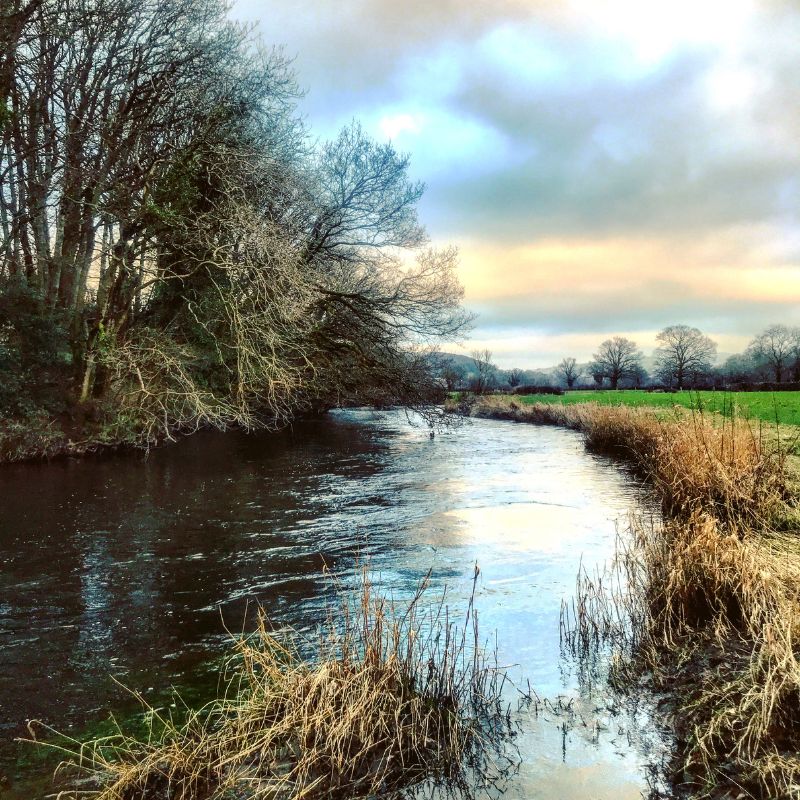 Afon Teifi, Ceredigion.