Posted in BRIDGES IPO news, News on Feb 24, 2026.
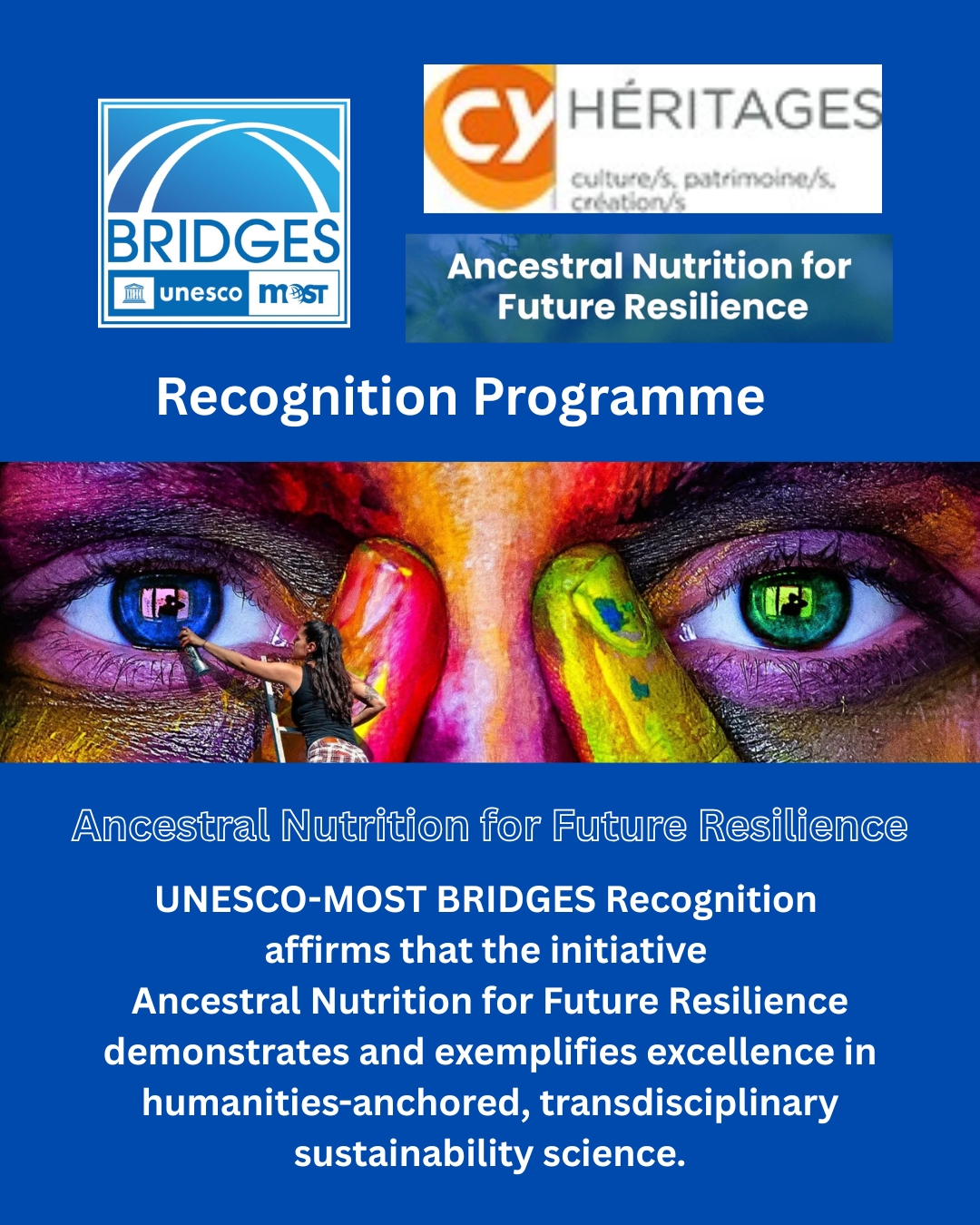
The UNESCO-MOST BRIDGES Coalition is proud to announce the formal recognition of Ancestral Nutrition for Future Resilience, as an outstanding initiative in humanities-anchored, transdisciplinary sustainability science.
UNESCO-MOST BRIDGES recognition follows a rigorous evaluation of the initiative’s alignment with BRIDGES’ principles, emphasising socially responsible, ethical, and transformative practice.
This initiative, rooted in the Héritages programme at Cergy Université, addresses food insecurity and ecological degradation in the Sahel, focusing specifically on the Kanem region of Chad. Its mission is to safeguard the ancestral practice of harvesting natural spirulina, known locally as dié, by Kanembu women. Harvesting spirulina is a traditional activity endangered by climate change and socio-environmental pressures.
A Heritage Under Pressure
In the arid landscapes of the Sahel, the ouadis, seasonal wetlands, serve as vital lifelines. For generations, the Kanembu women of Chad have harvested a natural blue-green algae known locally as dié (spirulina) from these waters. This practice is both a survival strategy and a profound expression of intangible cultural heritage, carrying deep ecological wisdom and providing a potent nutritional source.
However, this ancestral legacy is under threat. Climate change and unsustainable land use threaten the delicate balance of the ouadis. As these ecosystems degrade, the traditional knowledge associated with dié risks being lost, exacerbating malnutrition in a region already vulnerable to food instability.
The BRIDGES Approach: Humanities at the Core
Recognised for its adherence to transformative sustainability, the initiative places the Kanembu women’s traditional ecological knowledge at the centre of its research. Through ethnographic inquiry, oral histories, and participatory workshops, the project documents the rituals and techniques surrounding the harvest. This approach ensures that the "human factor", the cultural identity and agency of the harvesters, is the foundation of the scientific intervention.
Global Collaboration
While deeply rooted in the soil of Chad, the initiative draws strength from a global network. The initiative collaborates with a growing community of partners, including the Centre National de Recherche pour le Développement (CNRD), the National Food Security Program (PNDSSA), the Centre de Contrôle de Qualité des Denrées Alimentaires (CECOQDA), academic faculties from the University of N'Djamena, and McGill University’s Centre for Indigenous Peoples' Nutrition and Environment (CINE).
Transdisciplinary Innovation
The project bridges the gap between local practice and global science through a transdisciplinary approach. By integrating anthropology, ecology, and nutrition, the initiative is driving:
The choice of a co-designed, participatory approach ensures the relevance, legitimacy, and sustainability of these outcomes while respecting cultural specificity.
Sustainable Development Goals
Ancestral Nutrition for Future Resilience, serves as an exemplary case of how bridging diverse knowledge bases can provide innovative solutions to the SDG’s. This initiative attends to SDG 2: Zero Hunger; SDG 3: Good Health; SDG 5: Gender Equality; SDG 15: Life on Land; and SDG 17: Partnerships for the Goals.
Looking Ahead
Ancestral Nutrition for Future Resilience offers a model for how sustainability science can be both ethically grounded and practically effective, demonstrating the value of intangible cultural heritage. Future milestones include the formal submission of dié harvesting for the UNESCO Intangible Cultural Heritage listing, further cementing the global recognition of the Kanembu women’s contribution to sustainable food systems.
The work of Ancestral Nutrition for Future Resilience strengthens the global UNESCO-MOST BRIDGES network and contributes meaningfully to transformative, humanities-anchored community-led initiatives.
We heartily congratulate Ancestral Nutrition for Future Resilience on the official endorsement of BRIDGES recognition and commend their contribution to highlighting how the humanities can drive sustainability science to address modern environmental crises.
Affiliated Website Pages:
University of N'Djamena - Sciences
University of N'Djamena - Health
Cambridge Algal Innovation Centre
The Centre for Indigenous Peoples' Nutrition and Environment
BRIDGES Recognition: Are you working on a project that’s making a difference to local communities and our shared planet? Learn more about the BRIDGES recognition programme.