Posted in Blog on Sep 09, 2026.
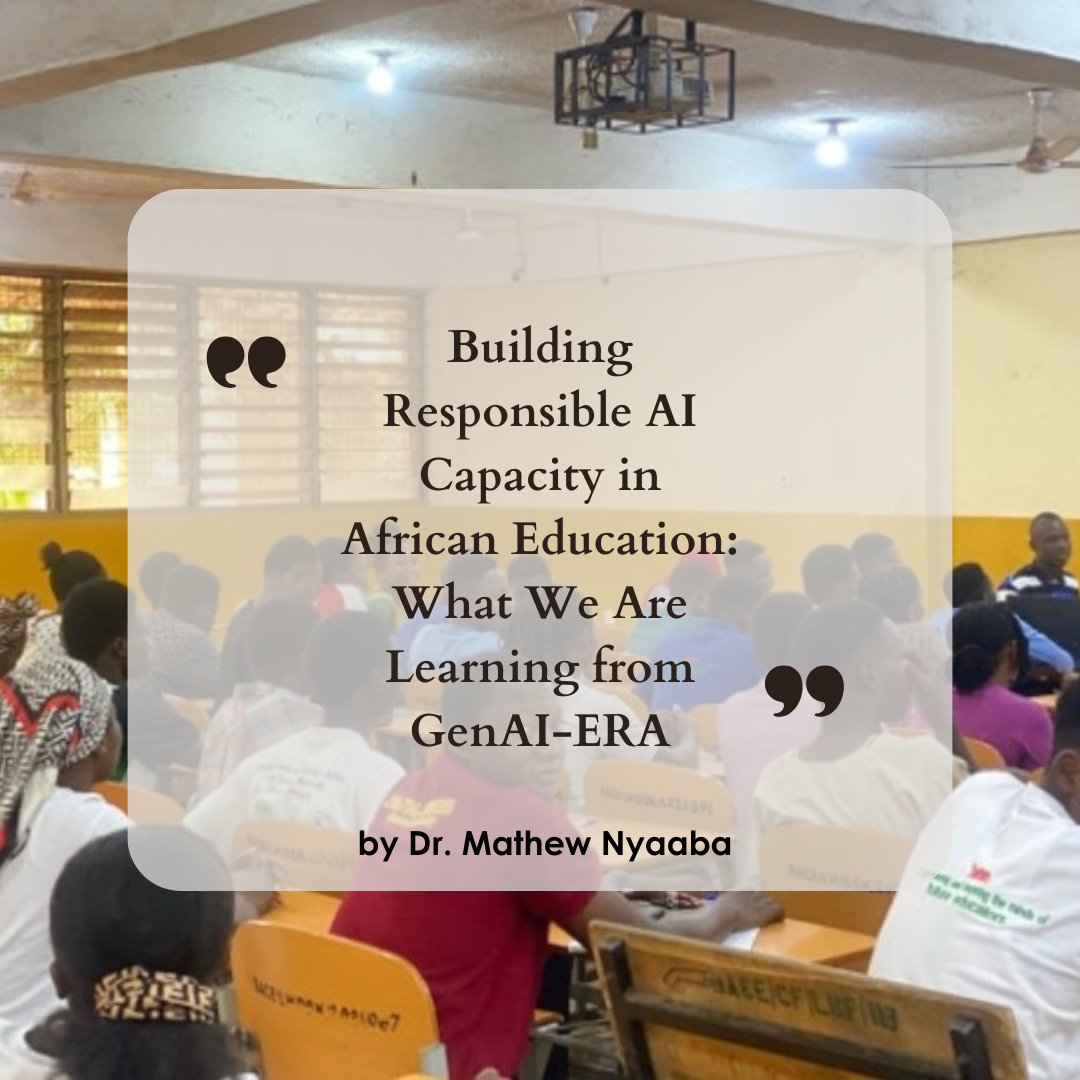
We are pleased to share a blog from our coalition members, Generative AI for Education and Research in Africa (GenAI-ERA), written by Dr. Matthew Nyaaba, who serves as the Executive Director of GenAI-ERA.
The primary mission of GenAI-ERA is to build responsible, locally relevant artificial intelligence capacity in African education and research. The initiative focuses on equipping educators, students, and scholars to engage with AI in ways that strengthen human judgement, respect local knowledge, protect privacy, and respond to the realities of diverse African educational contexts.
Key insights from the blog include focus on:
The blog concludes with concrete lessons for future policy and practice.
Author: Dr. Matthew Nyaaba
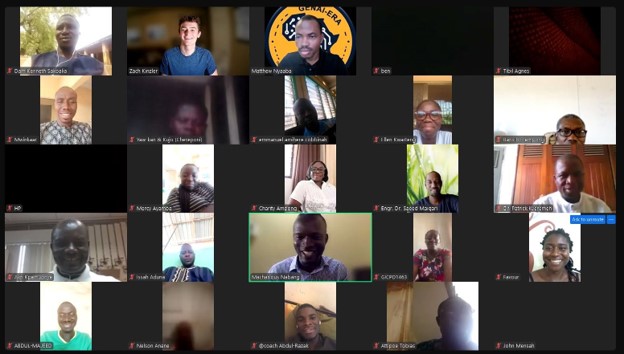 Figure 1. Members of the GenAI-ERA community engaging in conversations about responsible and locally relevant uses of artificial intelligence.
Generative artificial intelligence is becoming part of education across Africa. Teachers are experimenting with new tools, students are incorporating them into learning, researchers are exploring their use in scholarly work, and governments are beginning to develop policies for their adoption. Yet the speed of uptake has created a challenge: access to AI does not necessarily mean that people are prepared to use it responsibly. This question has shaped our work at Generative AI for Education and Research in Africa (GenAI-ERA): how can educators, scholars, and students engage with AI in ways that strengthen human judgement, respect local knowledge, and respond to the realities of their educational contexts?
GenAI-ERA grew from conversations among educators and researchers who were already encountering generative AI in classrooms, universities, and research spaces, often with limited structured guidance. Since then, our work has brought together professional learning, student engagement, scholarly conversations, policy discussions, locally grounded AI development, and dialogue around sustainability. Rather than offering a single model for responsible AI, these experiences are helping us understand what meaningful capacity-building requires.
From interest to responsible practice
One of our early initiatives was a three-day professional learning series on responsible and innovative prompt engineering. The programme attracted university educators, researchers, postgraduate students, and school educators. Sessions explored the use of generative AI for teaching, research, and academic writing, alongside verification, bias, academic integrity, cultural relevance, and professional judgement.
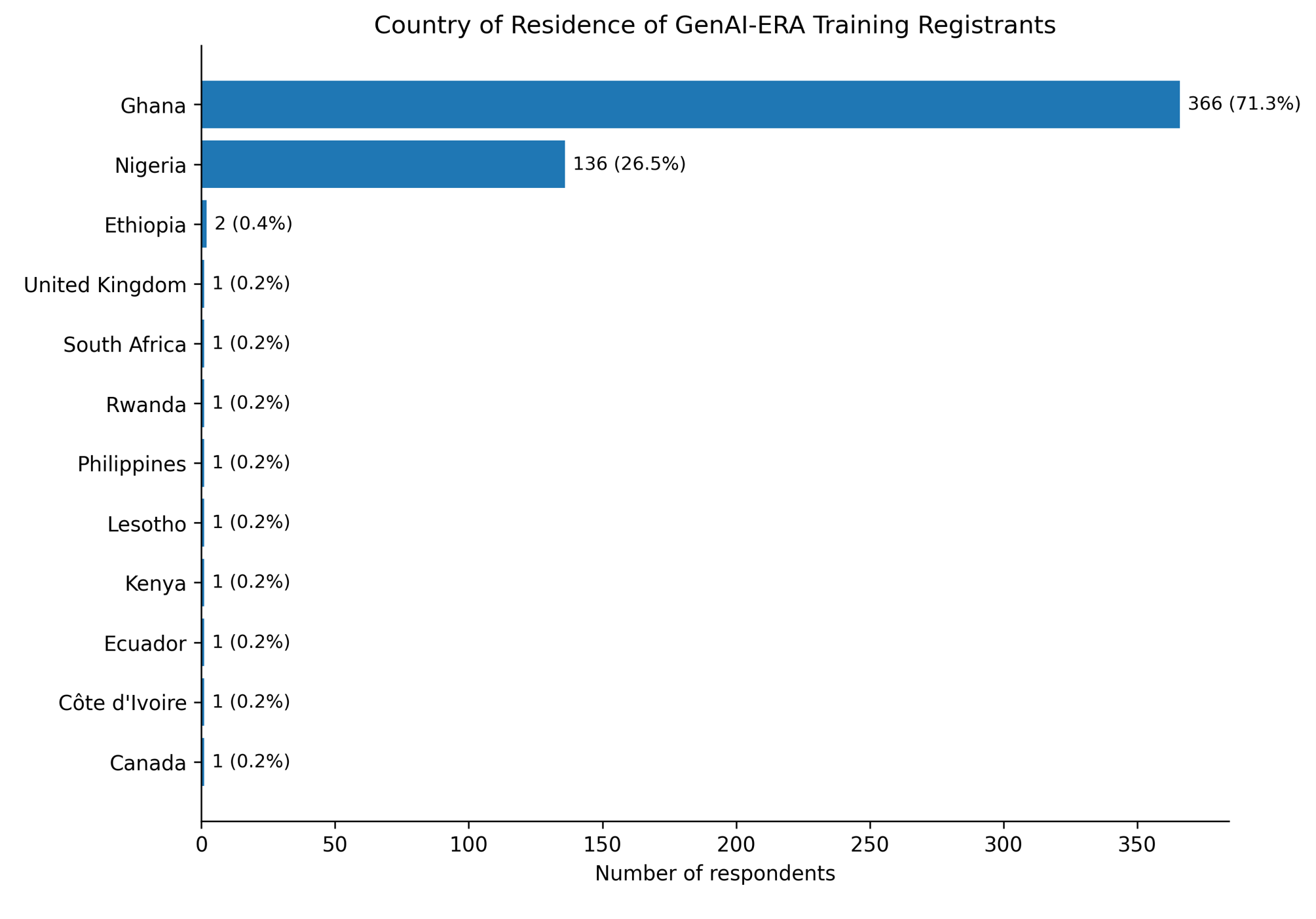 Figure 2. Country representation among respondents who registered for GenAI-ERA's three-day professional learning series.
The programme revealed an important distinction between interest and readiness. Many participants had already experimented with generative AI, but they still wanted practical guidance, affordable options, locally meaningful examples, and opportunities for continued learning. That experience changed how we thought about AI literacy. Prompting may help someone interact with an AI system, but responsible use requires more than knowing what to ask. It also requires knowing how to verify an answer, recognise limitations, consider bias and context, protect sensitive information, and decide when professional or human judgement should take priority.
As our programmes developed, the questions participants brought to us also became more complex. When should students disclose AI use? What kinds of AI assistance are appropriate in academic writing? How should generated information be verified? What happens to authorship when AI contributes to research or writing?
These conversations led us to engage more deliberately with AI ethics, academic integrity, research practice, student AI policies, and international guidance, including UNESCO's work on artificial intelligence and education (see Figure 3). In this we recorded over 500 registered participants (see Figure 2).
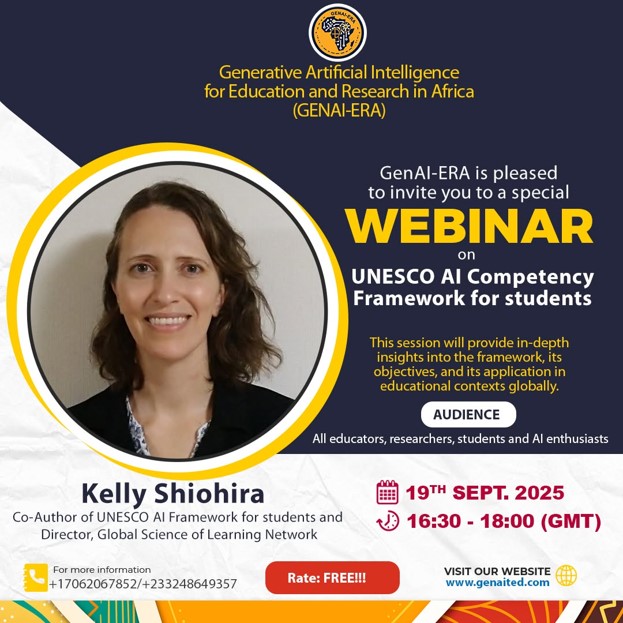 Figure 3. A GenAI-ERA expert engagement exploring UNESCO's AI Competency Framework for Students and its application in educational contexts.
We have also introduced educators to emerging AI tools and professional learning opportunities. However, the purpose has not been to promote particular technologies. Our emphasis is on helping participants ask whether a tool is suitable for the problem they are trying to solve, what its limitations may be, and what responsibility remains with the human user.
For us, responsible AI literacy therefore combines practical competence with critical judgement.
Building responsible habits among students and scholars
Students often encounter generative AI before their institutions have established clear expectations for its use. We have tried to create spaces where students can discuss what responsible use means in their own learning (see Figure 4a and 4b). GenAI-ERA currently supports student AI clubs in three colleges in Ghana. The clubs discuss verification, attribution, academic integrity, misinformation, overdependence, and the role AI should play in learning.
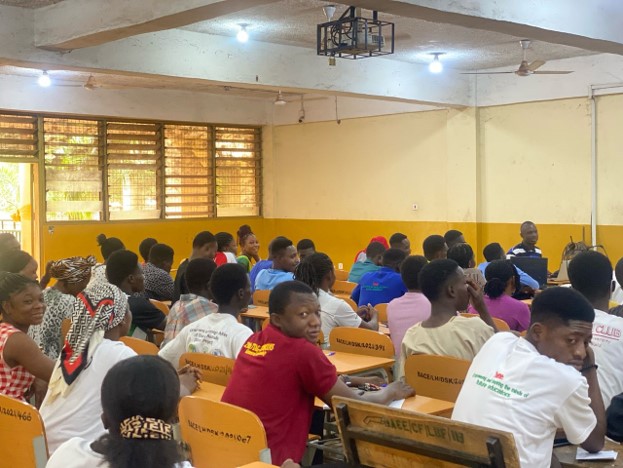 Figure 4a. Members of the Bagabaga College of Education Student AI Club during one of their regular meetings.
Other student-led engagements have created opportunities for wider conversations about the effective and responsible use of AI in education.
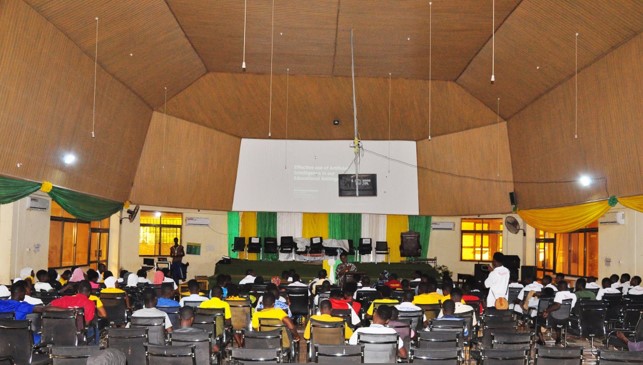 Figure 4b. Students participating in a GenAI-ERA-supported discussion on the effective and responsible use of artificial intelligence in educational settings.
These engagements suggest that responsible AI habits are better developed through conversation and reflection than through rules alone. Students need opportunities to examine how and why they use AI, not simply instructions about whether they may use it.
Researchers and postgraduate students raise a related but different set of concerns. Their questions often involve literature engagement, writing, editing, publishing, disclosure, authorship, verification, and research integrity. They also confront a broader question about whose knowledge becomes visible through AI systems that may rely heavily on knowledge produced outside African contexts. This makes responsible AI use both a technical and an intellectual issue. Researchers need to evaluate whether an AI-generated response is accurate, and also what knowledge it privileges, what may be absent, and how the output relates to their own scholarly and contextual judgement.
One continent, different educational realities
Our collaborations across Ghana, Nigeria, South Africa, Lesotho, and other settings have reinforced another lesson: there is no single African experience of AI in education. Connectivity, language, curriculum, institutional policy, access to paid tools, infrastructure, and professional needs vary considerably across countries and institutions. What works in one university or school system may not translate directly into another. Our professional learning activities have therefore benefited from educators and practitioners working in different settings.
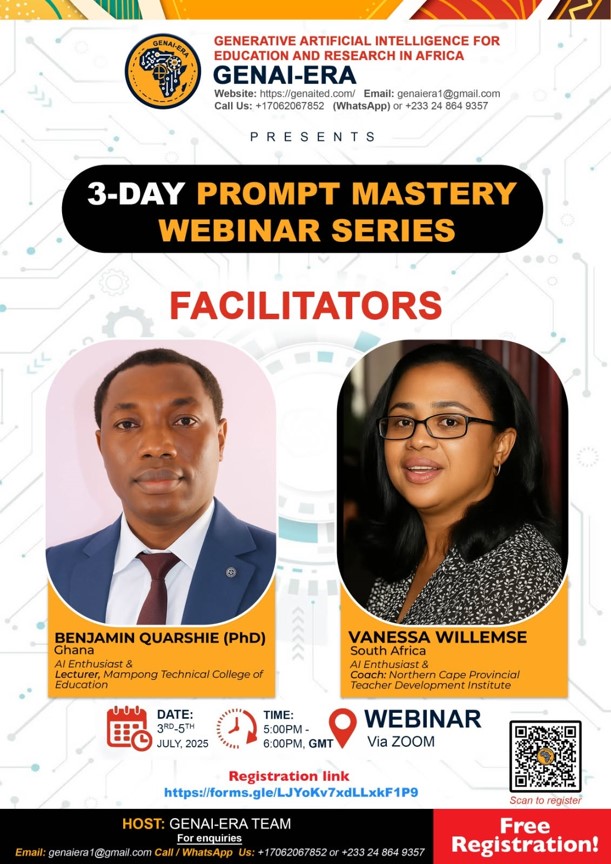 Figure 5. Educators and practitioners from different African contexts contributing to GenAI-ERA professional learning and knowledge exchange.
Some sessions have explored emerging professional learning initiatives such as Microsoft Elevate. Our interest in such programmes is not in promoting a particular platform, but in examining how available resources can be interpreted and adapted for different educational environments.
Working across contexts has helped us resist two extremes, if solutions developed elsewhere can simply be transferred into African education, and speaking about Africa as though every country faces the same challenges. Pan-African collaboration is valuable precisely because it allows people to learn across contexts without erasing the differences between them (see Figure 5).
From using AI to shaping it
Capacity-building also raises a more fundamental question. Is the goal simply to make educators more effective users of existing AI systems, or should they also have a role in determining what educational AI looks like? Research led by members of the GenAI-ERA community has begun exploring this through GenAITEd Ghana, a conversational AI prototype for teacher education. The prototype is linked to Ghana's national teacher education curriculum and incorporates subject-specific support, multilingual interaction, and teacher oversight. Its significance is not simply that another AI tool is being developed. The larger value lies in bringing curriculum, language, culture, and teacher expertise into the design process.
This has led us to think about AI capacity differently. Training people to use technology is important, but genuine participation also means creating opportunities for local educators, researchers, and institutions to influence what systems are designed to do, what knowledge they reflect, and how they are evaluated.
The same principle applies to policy.
Members of our network have examined Ghana’s National Artificial Intelligence Strategy, 2025-2035 from an education perspective. The strategy attends to areas such as AI literacy, youth skills, rural participation, local-language data, inclusion, and responsible governance. Our analysis has also identified educational questions requiring continuing attention, including teacher preparation, assessment, learner protection, multilingual teaching, cultural relevance, and participation in implementation.
A national AI strategy can be ambitious while teachers remain uncertain about classroom practice, students receive inconsistent guidance, and universities continue to work through questions of assessment, privacy, authorship, and responsibility. The challenge, therefore, is not only to develop policy but to ensure that policy becomes meaningful in the everyday decisions of the people expected to implement it.
Expanding responsibility to include sustainability
Our conversations have also encouraged us to think more broadly about what responsible AI means. A GenAI-ERA discussion on environmentally friendly AI explored the relationship between AI, learning, infrastructure, energy, and environmental sustainability (see Figure 6).
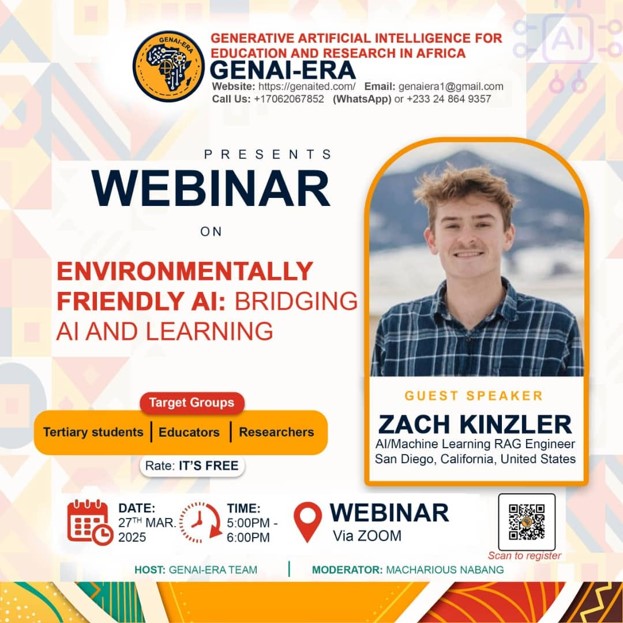 Figure 6. A GenAI-ERA discussion examining artificial intelligence, learning, infrastructure, and environmental sustainability.
Discussions about responsible AI often concentrate on fairness, privacy, bias, safety, and academic integrity. These questions remain important, but the resources required to develop and operate AI systems also deserve attention. This has particular significance where access to electricity, computing infrastructure, connectivity, and digital resources is already uneven. Decisions about educational AI therefore need to consider not only what a technology makes possible, but also what resources its use requires and whether those choices are sustainable within particular contexts.
Lessons for policy and practice
• Develop regionally grounded and discipline-specific AI models and tools. These systems should be informed by African philosophies, values, cultures, languages, knowledge systems, and educational contexts.
• Invest in people alongside infrastructure. Access to technology should be accompanied by opportunities to develop judgement, verification skills, ethical awareness, and contextual understanding.
• Develop guidance with the people who will use it. Students, educators, researchers, and communities should have meaningful opportunities to contribute to decisions affecting teaching, learning, assessment, and research.
• Make institutional expectations clear. Guidance on academic integrity, authorship, disclosure, privacy, assessment, and human review should be practical enough to inform everyday decisions.
• Support locally grounded research and development. African languages, curricula, cultures, knowledge systems, and educational priorities should influence how educational AI systems are designed, trained, evaluated, and implemented.
• Treat sustainability as part of responsible adoption. Environmental and infrastructural considerations should accompany discussions of fairness, safety, inclusion, access, and human agency.
Challenges and what we need next
GenAI-ERA still faces uneven regional participation, limited funding, and heavy reliance on voluntary support. Moving forward, we need stronger regional representation, sustainable funding, strategic partnerships, and greater support for African-led research, professional learning, student initiatives, and locally grounded AI development.