Latest News: The No Limits to Hope Conference – join online!...


Latest News: The No Limits to Hope Conference – join online!...
Start
18 Mar 2026 @ 10:00:am
Finish
27 Mar 2026 @ 10:00:am
Location
Mação, Portugal
Event Link
Event Details
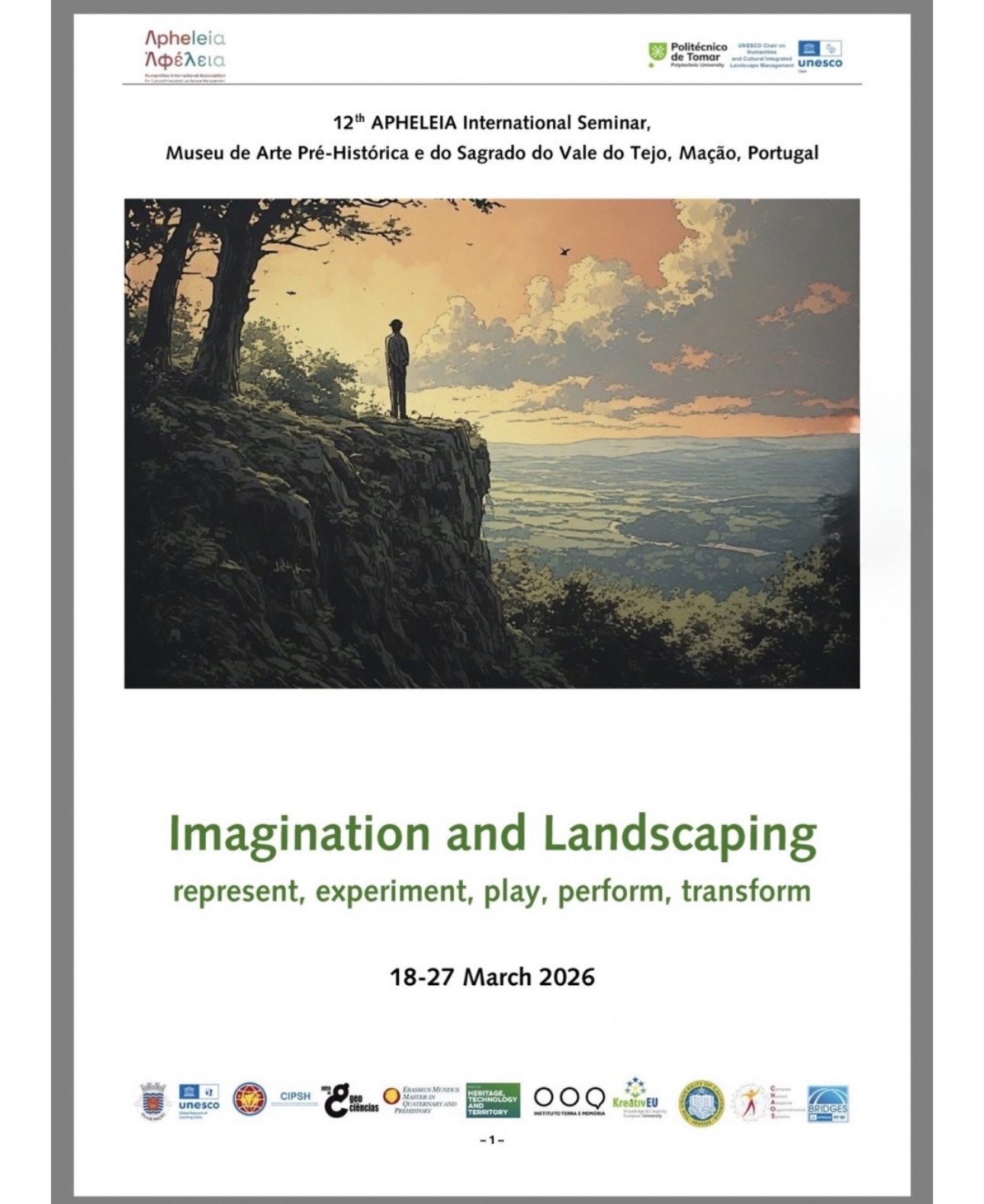
Imagination and Landscaping: Represent, Experiment, Play, Perform, Transform.
The 12th APHELEIA International seminar will be held in Mação, Portugal, on 18-27 March 2026.
The 10 day intensive programme will include conferences in the morning and workshops, debates and visits in the afternoons.
From the assessment of prehistoric occupations to contemporary communities, the seminar will discuss the importance of imagination in the process leading to the design of cultural landscapes, i.e., features carrying a human induced component (domestication , selection of species, scattering of artefacts, rock art, human constructions, symbols, signs, etc.).
The seminar will seek to debate in depth the imagination dimensions of representation, experimentation, playing and performing, in their interplay with sociocultural transformations.
The programme is structured in six topics:
1. Beyond Imagination: the building of utopias - 18 March.
2. Imagination and communities - 19 March.
3. Visualising Transformation: Still Images of the Changing Environment - 20-21 March.
4. BRIDGES preparatory workshop - 22 March.
5. Imagination and knowledge crossroads - 23 March.
6. Imagination and heritage - 24-25 March.
UNESCO-MOST BRIDGES preparatory workshop: 22 March. 10:00.
Steven Hartman, John Crowley (Chairs) – Building bridges from meaning to policy formulation and impact: Mobilizing humanities expertise in a rapidly changing world. A Consultative Discussion.
The UNESCO-MOST BRIDGES Coalition is entering a transformative phase, moving toward sharper strategic definition and a more visible role in global policy, specifically within the MOST Intergovernmental Council (IGC). To drive this evolution, BRIDGES and ASU’s Julie Ann Wrigley Global Futures Laboratory, partnering with UNESCO’s MOST programme, The Club of Rome, and APHELEIA, will host a series of expert workshops and consultations throughout the first half of 2026. These sessions will bring together academics, policymakers, and civil society leaders to bridge the gap between humanities-based knowledge and practical policy implementation. Leading to the development of a suite of "guiding instruments" to help UNESCO Member States apply humanities insights to policy formulation. The process will conclude with a high-level event at UNESCO Headquarters in May 2026 to finalise these strategic outputs.